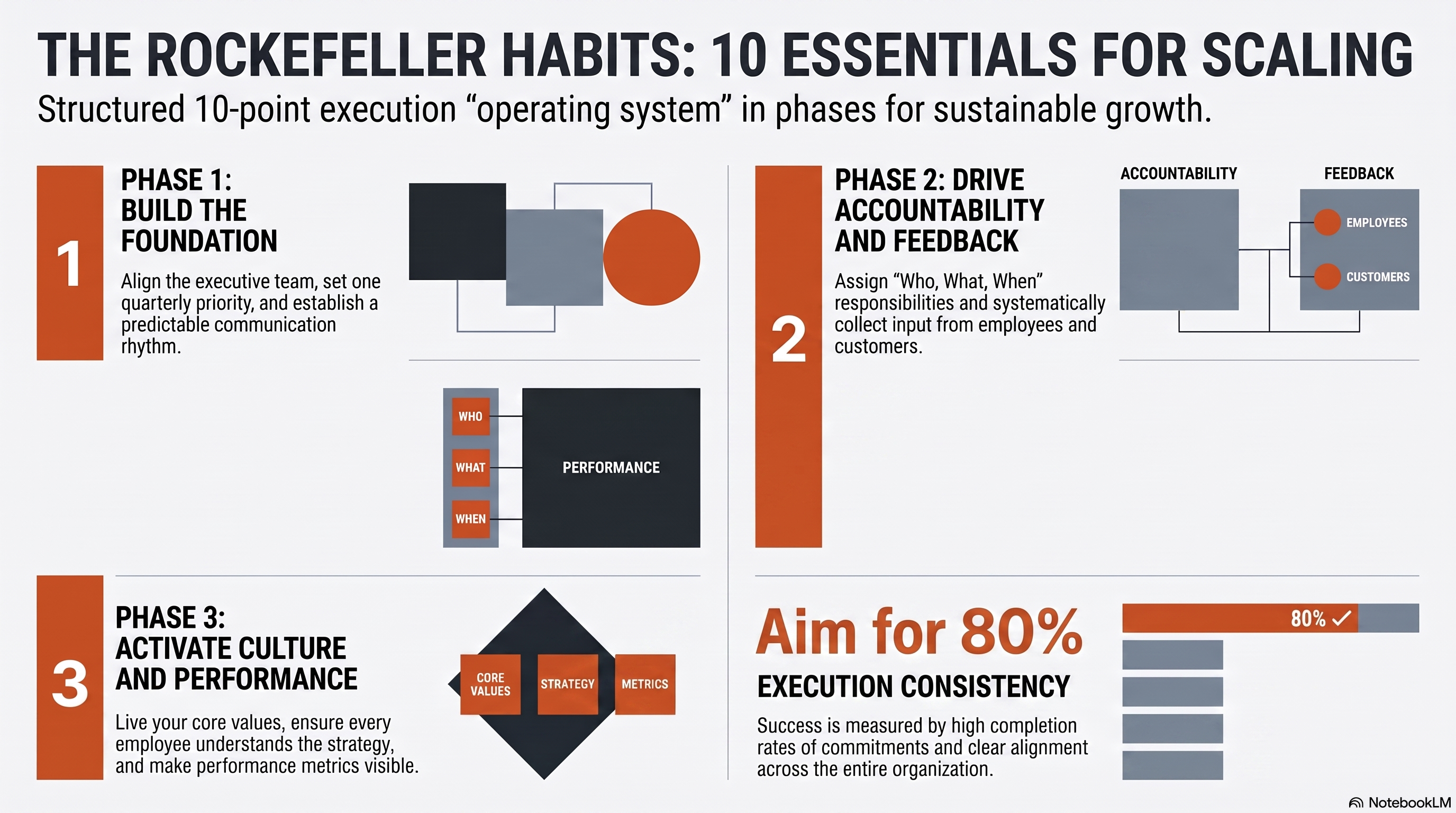
A business can have a weekly meeting, a set of priorities and a dashboard, yet still depend on the founder to keep everything moving.
The presence of a routine does not tell you whether it is helping. The question is whether information reaches the right people and decisions lead to action.
Use the checklist as a conversation
Verne Harnish’s Rockefeller Habits Execution Checklist covers practices including leadership alignment, priorities, communication, accountability, feedback and visibility of performance. It is a way to examine how consistently a business connects its plans to its everyday work.
Ask your leadership team to assess the practices independently before comparing views. The areas where people disagree may reveal more than an average score.
Look for the consequence
If accountability is unclear, where does that show up? Perhaps customers wait while a problem passes between functions. If priorities are poorly understood, which decisions are different as a result?
Connect the missing habit to something the business needs to improve. Otherwise, the exercise can become a discussion about being more disciplined, without identifying anything worth doing differently.
Choose a useful starting point
Do not turn every gap into a new initiative at once. Select a practice that addresses a current constraint and agree how you will know it is helping.
For example, a leadership meeting might need fewer updates and more time resolving the decisions delaying delivery. The test is whether those decisions move, not whether the meeting follows a more elaborate agenda.
Review the change after the team has used it. Keep what helps, adjust what does not and build from there.
Framework: Scaling Up’s Rockefeller Habits Execution Checklist.