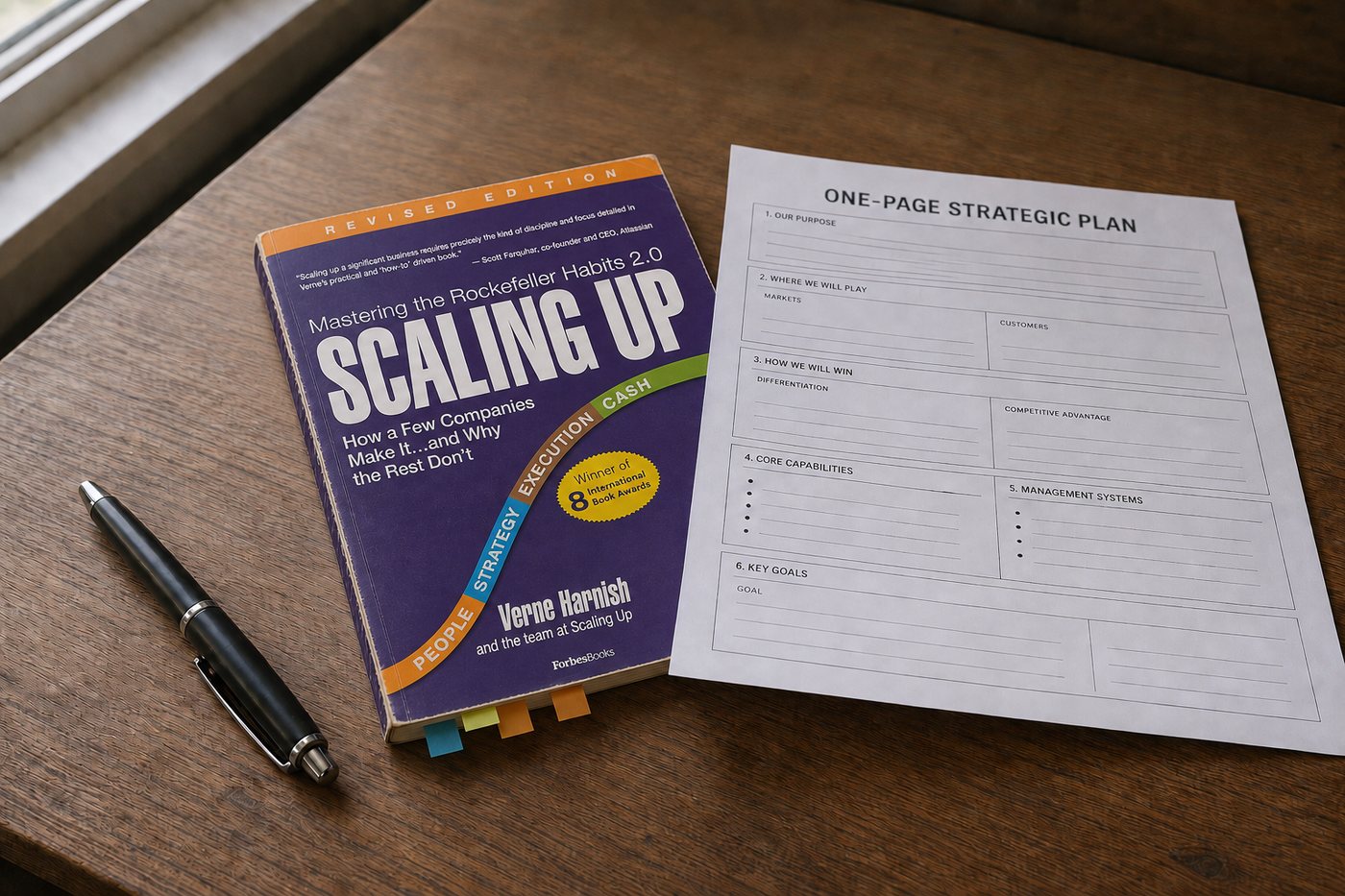
Reducing a strategy document to one page can make it easier to read. It does not automatically make the strategy clearer.
If the leadership team still disagrees about the customers it serves, the value it offers or the opportunities it will pursue, a shorter document may simply hide the disagreement more neatly.
Do the thinking before filling the spaces
Use a planning page to structure the conversation. What is the company trying to become? Where can it win? What would need to change over the next year? Which commitments belong in the coming quarter?
Give particular attention to the choices that compete for the same people, money and management attention. A list of desirable outcomes does not settle those trade-offs.
Make the omissions deliberate
Ask what the company will decline or pause. If every opportunity still fits, the plan may not be making a meaningful choice.
This matters beyond the leadership meeting. A manager deciding whether to take on unusual customer work needs to understand the company’s direction well enough to recognise the trade-off.
Keep the plan connected to decisions
Return to it when priorities compete or assumptions change. The question is whether the plan helps the team choose, rather than whether every box stays filled in.
Ask leaders to explain the direction in their own words. Listen for a shared understanding of why the choices matter, not a memorised statement.
The One-Page Strategic Plan is one of the tools associated with Scaling Up. Its usefulness comes from the quality of the thinking behind it and the team’s willingness to act on what it agrees.